Archive of Published Research
This archive presents a selection of my peer-reviewed articles, book chapters and academic publications developed across the fields of tourism, cultural heritage, food studies, geography and territorial development. Together, these works reflect an interdisciplinary research agenda concerned with how tourism intersects with culture, landscapes, identity, sustainability, gastronomy and local development in Brazil, Latin America and broader international contexts.

Abstract: This article examines the representation of hunger in Latin American cinema associated with Third Cinema through the study of four films produced during the 1960s in Argentina, Brazil, Cuba, and Mexico. The objective is to examine how food scarcity was constructed not only as a material condition but also as an aesthetic, political, and symbolic language. Methodologically, the study is based on content analysis, articulated with discursive analysis and film criticism. The comparative analysis identified recurring patterns through which hunger operates as explicit structural denunciation, existential metaphor, marker of social inequality, rupture of privileges, and symbol of denied cultural belonging. The results demonstrate that hunger functions as a central narrative device in Third Cinema, articulating social critique, historical memory, and political commitment. The study contributes to interdisciplinary debates on cinema, cultural studies, and food studies by highlighting the strategic role of hunger as a language of resistance and meaning production in politically engaged audiovisual works.
Keywords: Third Cinema, hunger, Latin American cinema, film discourse
Iberoamérica Journal, 2026.
Institute of Latin American Studies of the Russian Academy of Sciences (ILA RAS)
https://doi.org/10.37656/s20768400-2026-03-10

Abstract: The development of regenerative tourism has been proposed as a response to the limitations of conventional sustainable tourism, particularly its restricted capacity to address long-term socioecological challenges. However, empirical evidence supporting regenerative tourism remains limited, especially at territorial and public policy scales in biodiverse countries. This study aims to analyze birdwatching tourism as a regenerative-oriented tourism practice in Brazil, based on national public policy evidence. The research adopts analytical and conceptual design grounded in secondary data analysis. The primary source is the National Diagnosis of Public Policies for Birdwatching Tourism in Brazil published by the Ministry of Tourism in 2025, complemented by institutional reports and peer-reviewed scientific literature on bird conservation, citizen science, and regenerative tourism. The data were reinterpreted using an analytical framework focused on key regenerative dimensions, including conservation financing, biodiversity monitoring, participatory governance, and territorial planning. The results indicate that birdwatching tourism in Brazil operates predominantly within areas of high conservation priority and is supported by measurable mechanisms relevant to regeneration. These mechanisms include the generation of economic resources associated with conservation activities, large-scale biodiversity monitoring through citizen science platforms, and institutionalized governance arrangements aligned with biodiversity conservation policies. Although the concept of regenerative tourism is not explicitly employed in Brazilian tourism policy, birdwatching tourism demonstrates functional characteristics consistent with regenerative principles. The study concludes that birdwatching tourism in Brazil can be understood as a regenerative-oriented practice when regeneration is interpreted as a long-term, systemic, and policy-mediated process. The findings contribute to strengthening the empirical basis of regenerative tourism research and highlight the relevance of public policy analysis for assessing regenerative dynamics in megadiverse contexts.
Keywords: avitourism, biodiversity conservation, citizen science, tourism governance, Brazil
RUDN Journal of Ecology and Life Safety, 2026
Peoples' Friendship University of Russia - RUDN University
http://dx.doi.org/10.22363/2313-2310-2026-34-2-257-274
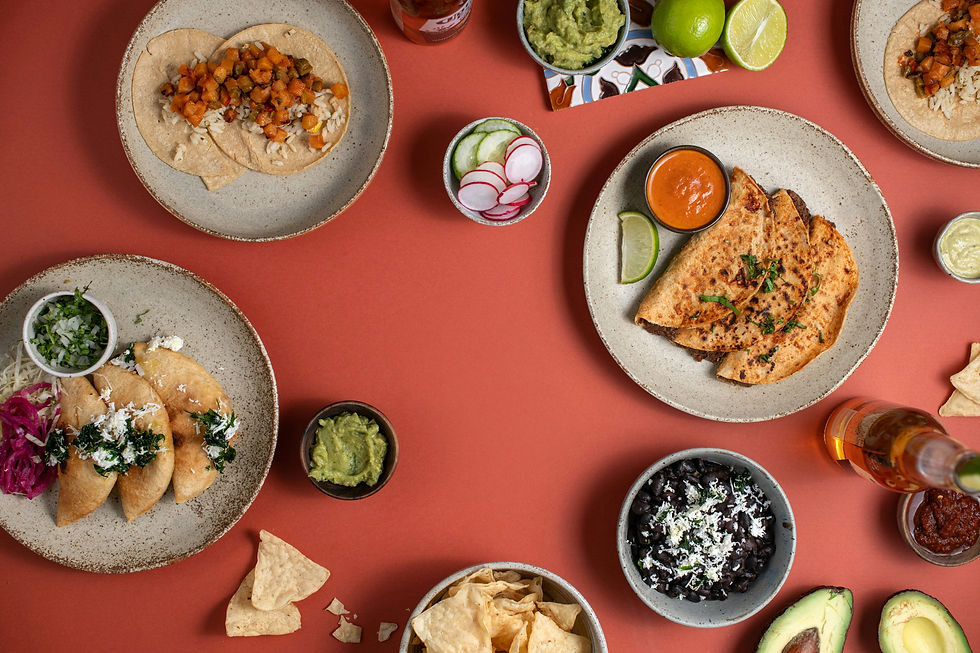
Abstract: This article examines culinary tourism as an effective tool for sustainable local development in Latin America. Through regional examples such as the Wine Route in Mendoza, Argentina, the Guelaguetza Festival in Oaxaca, Mexico, and the traditional barreado dish from Morretes, Brazil, the analysis explores how gastronomic traditions can strengthen local economies, preserve cultural heritage, and foster social cohesion. The research highlights the importance of active community involvement and the adoption of sustainable practices in tourism development, ensuring that the benefits are distributed fairly and inclusively. The cases of Mendoza, Oaxaca, and Morretes were selected due to their well-established gastronomic tourism practices and demonstrable impacts on local economic and cultural development. Data were collected through a qualitative literature review and case analysis to provide comprehensive insights into the role of culinary tourism in fostering sustainable local development.
Keywords: Culinary Tourism; Local Development; Latin America; Food Culture; Local Food Production
Revista Diversidad de las Culturas, 2024
Universidad Nacional de Jujuy - Argentina
https://doi.org/10.5281/zenodo.15446795
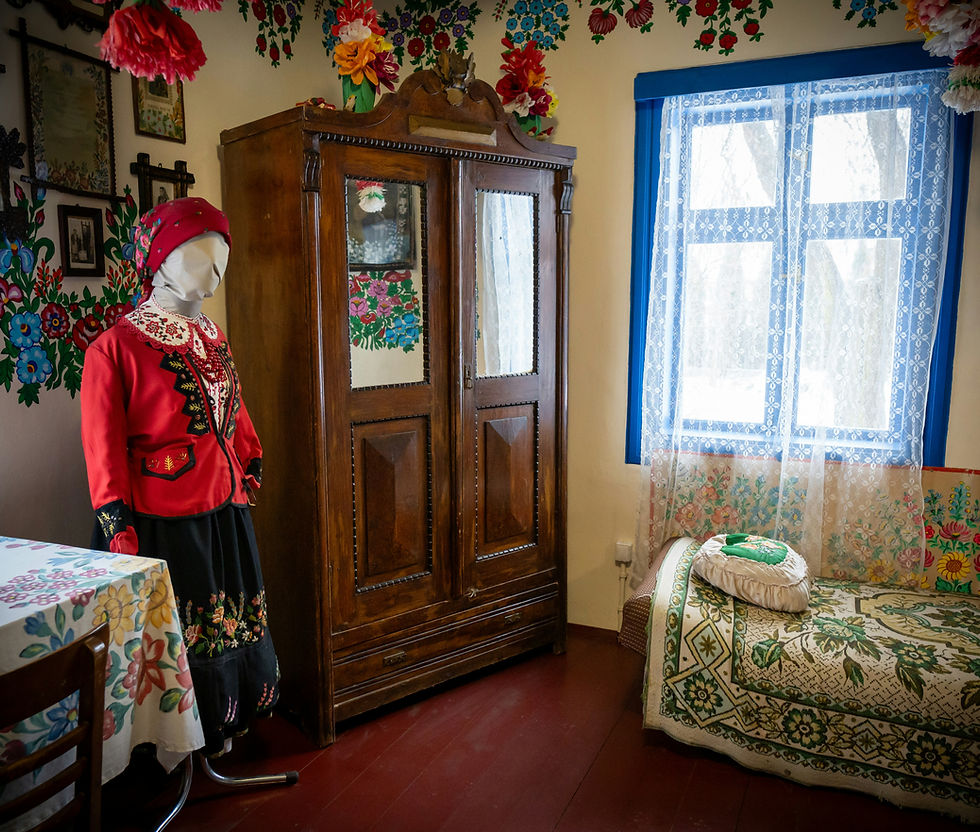
Abstract: This research aims to present and discuss Polish immigration from the late 19th and early 20th centuries to the Latin American context of Brazil, especially focused on the region of the city of Curitiba/PR. Through a dense bibliographic review, this research presents historical and social data that present the reasons, stages and impacts of immigration of this ethnic group to Brazil. In a second step, there is a presentation of facts that demonstrate the importance of this immigration in the region, which are discussed and exposed later as a conclusion of the research.
Keywords: Culture; Curitiba/PR; Immigration; Latin America; Poles.
RELACult – Latin American Journal of Studies in Culture and Society, 2021
Latin American Center for Cultural Studies (CLAEC) - Brazil

Abstract: Nowadays, only a small fraction of the immense variety of existing foods is produced commercially, this is due to the logic of large-scale production based on agribusiness that prioritizes the production of commodities such as soy, corn, rice and wheat. However, in the opposite direction of this process and as a mitigator mechanism of his effects, there is the model of the faxinal system, a sustainable agrosilvopastoral production system and concept that comprises agricultural diversity, seasonality and regionality and the food traditions. In this way, this paper has as main objective to contribute to the debate about the standardization and homogenization of eating habits, regional food traditions, and sustainable agricultural food production that respects regional agricultural varieties. To explore this theme, this research was based on a dense bibliographic review on scientific articles, books, theses, dissertations and documental research at materials produced by entities related to the faxinal system and rural social movements.
Keywords: Faxinal system; Local Development; Latin America; Food traditions; Local Food Production
Culture, Society, and Sustainability: A Necessary Dialogue (Book Chapter), 2020
Pantanal Publishing - Brazil
https://doi.org/10.46420/9786588319055cap4

Abstract: This paper aims to study the social and cultural issues that led to the marginalization of Polish immigrants and their decedents, focus on a food heritage and cultural aspect in the Curitiba-PR region. Based on bibliographical research about anthropological and sociologic discussions that marked the immigration, colonization, and prejudice, and allied with participative observation at polish colonies at the area, were possible appoint how this phenomenon has started, the main reasons of the prejudice, and how the food heritage is an important theme at this discussion. In conclusion, this article addressed the food by a social perspective, necessary to better understand the historical and actual relations of polish immigrants and their descendants with the local people, immigrants of other ethnicities, and with the region.
Keywords: Poles; Food heritage; Culturality; Immigration; Marginalization; Curitiba-PR.

Abstract: This paper aims to present the food traditions of Polish immigrants and their descendants, as part of the cultural heritage of this ethnic group, and to dialogue with the potential use of this cultural legacy as a contribution mechanism for the formation of tourist attractions for Curitiba - PR and its metropolitan region. For this work, an exploratory bibliographic review was used in references related to immigration and cultural identity of the Polish immigrant in the region, in addition to contributions from tourism references for the technical basis. During the work it is possible to observe some elements of immigration and settlement of Poles in the region of Curitiba - PR, such as the fact they have been allocated to the city margins, which hindered its tourist potential. However, it is observed that these problems can be solved by adapting to tourist routes of the rural type, where one can work with the local communities.
Keywords: Food Traditions; Polish Culture; Gastronomic Tourism; Gastronomic Heritage.

Abstract: Food is the materialization of the culinary knowledge of a territory's cultures. In the Goiano Cerrado, it represents not only the fusion of Indigenous, African, and European knowledge but also an expression of the Cerrado biome's nature. This research aims to present the influence of the Cerrado territory on the formation of regional Goiano cuisine, showing, through a historical perspective, how native ingredients from this biome have always been present in the region's flavors. Based on exploratory research of bibliographic and documentary sources, this work qualitatively highlights the importance of pequi, baru, cajuzinho-do-cerrado, and corn in shaping Goiano gastronomy. In conclusion, this research highlights the need for greater appreciation and the pursuit of the patrimonialization of Goiano cuisine..
Keywords: Regional gastronomy; Cerrado terroir; Pequi, Cajuzinho-do-cerrado; Baru Nut.
Revista Hospitalidade (RevHosp), 2025
Anhembi-Morumbi University (UAM) – Brazil
https://doi.org/10.29147/revhosp.v22.1209

Abstract: The study analyzes the relationship between cultural heritage, identity, and teaching in cultural tourism through a field class conducted in Prudentópolis, Paraná, Brazil. The main objective is to understand how experiential learning contributes to consolidating the theoretical content of the Tourism and Culture course, enabling students to experience, in practice, the challenges and potential of cultural and religious tourism in a destination shaped by Ukrainian and Polish immigration. The methodology involved three main stages: prior planning, fieldwork execution, and systematization of results, integrating visits to museums, churches, and the Salto São João State Natural Monument, supported by local institutions. The results indicate that experiential fieldwork fosters the articulation between theory and practice, enhances students’ critical understanding of the preservation of tangible and intangible heritage, stimulates reflective thinking on the authenticity of tourist experiences, and strengthens awareness of local cultural identity. Furthermore, it highlights the importance of interdisciplinarity and the interaction between university and community in training professionals better prepared for tourism planning and management. The study concludes that this experience represents a relevant pedagogical model that can be replicated in other destinations linking heritage, identity, and cultural tourism, reinforcing the need for integrated approaches in higher tourism education..
Keywords: Cultural Tourism; Cultural Heritage; Experiential Learning; Identity; Prudentópolis/PR.
Revista Destarte, 2025
Estácio de Sá College of Vila Velha (FESVV) - Brazil
https://doi.org/10.5281/zenodo.17887512

Abstract: This article aims to understand the construction of a tourist attraction in a locality with low tourism density, specifically through the gastronomy of Chica Doida, an intangible cultural heritage of Quirinópolis, Goiás, Brazil. It seeks to provide a theoretical perspective for interpreting the (re)significations acquired by this tourist attraction in the current context, amid the intersection of different temporalities and spatialities. The study begins with a complex discussion and subsequently addresses the concepts of intangible cultural heritage and gastronomy, associated with the geographical context of the category of place. Thus, the study will employ analytical, interpretative, and case study methods. Among the main findings, the study seeks to understand the place of Chica Doida gastronomy, the history of the corn-based recipe, and its importance in promoting local tourism. Finally, it should be emphasized that this scientific investigation reflects discussions developed within an ongoing master’s dissertation..
Keywords: Food Culture, Heritage, Place, Gastronomy, Rural Landscape.
Food sovereignty, production and supply dynamics in the long term (Book Chapter), 2023
University of Coimbra - Portugal